Moths/butterflies need to hang vertically (like on a wall or tree) shortly after they eclose for gravity to inflate their wings with fluid.
Cicadas are the same way. If you've experienced a periodic cicada emergence, you may have noticed a cicada with shriveled wings. If it's vertical (likely hanging from its exuvia), it's probably inflating its wings. If it's on the ground, it's probably seeking a vertical surface, or already failed to mount one in time and thus can never fly.
Today I found this creature crawling on pavement:
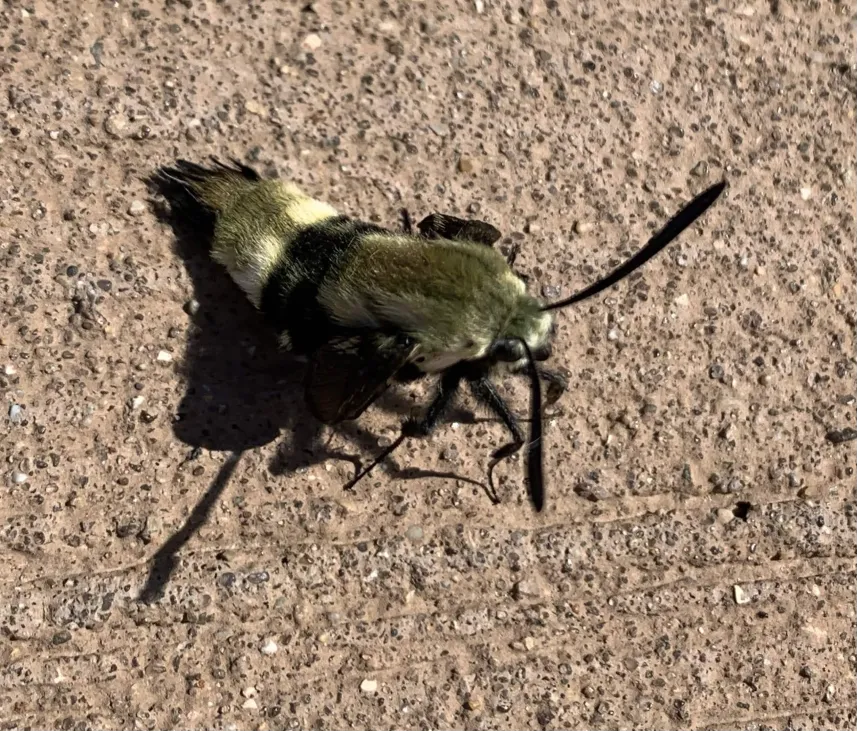
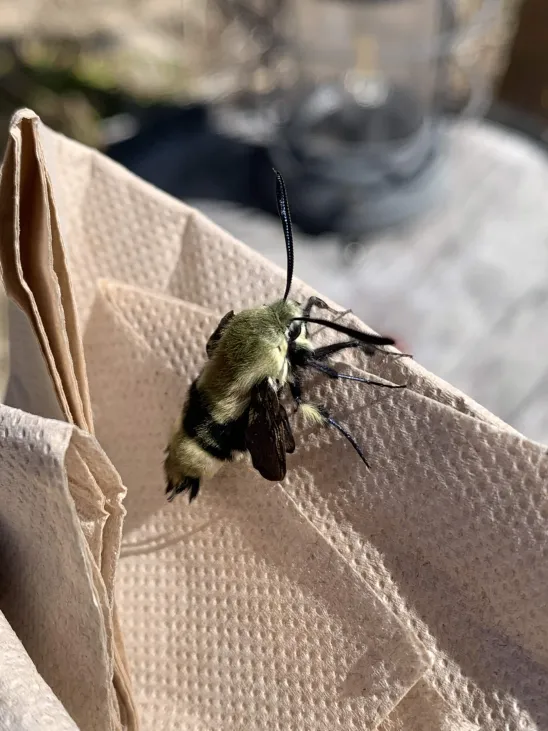
Coworkers thought it a bee or hornet, but I recognized it as a moth with tiny wings. I gave it a folded napkin to perch on, even though its wings were so tiny I doubted they would inflate properly. The moth hung vertically as soon as it could, and inflated its wings to full size over about 20 minutes.
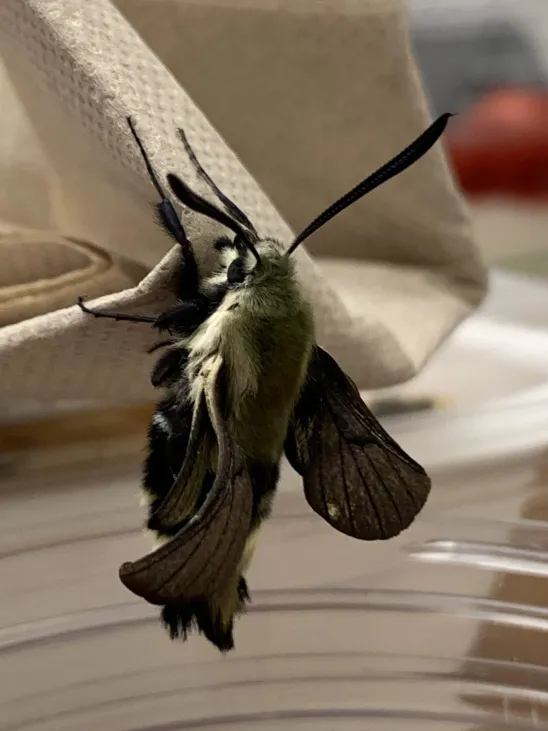
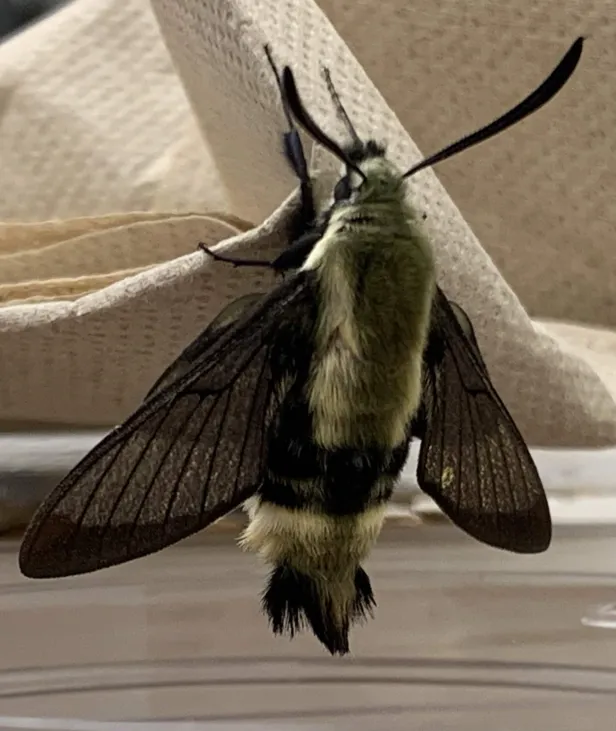
Here's a macro photo that makes you want to run a hand through its fur:
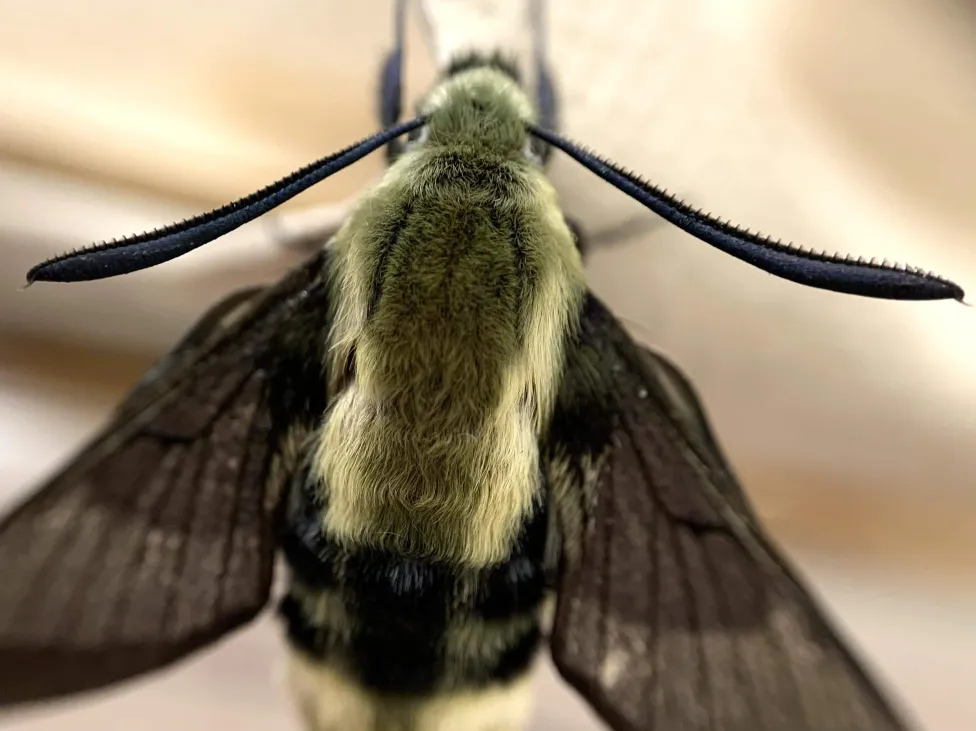
It knocked off a lot of scales on its first flight attempt, and also shed some while merely buzzing its wings. I'm guessing this is normal for clearwing moths?
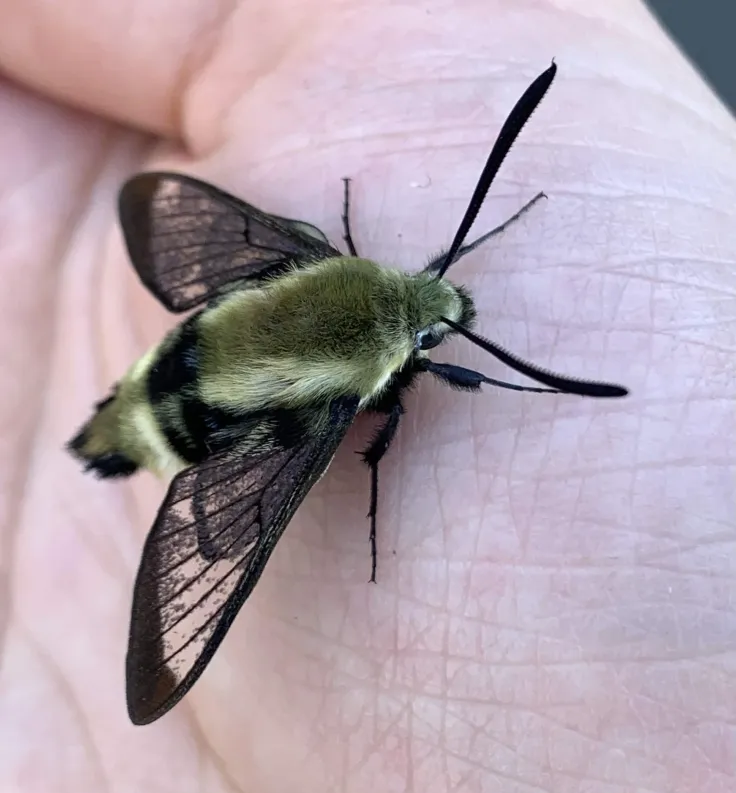
I like knowing enough about bugs to help them. If you find a moth/butterfly/cicada on the ground with crumpled wings, consider offering it a vertical surface. (If you do this, I should warn that the moth does take a piss as soon as it's done gaining flight. It's been in a chrysalis for a long time; wouldn't that be second on your to-do list, too?)
Another favorite trick of mine: If you catch a spider indoors, offer it a tiny wet piece of paper towel (or a wet cotton ball). The spider is likely thirsty, so you can watch it lick water from the paper.